
 Bentley
 Audi
 BMW
 Cadillac
 Ferrari
 Lamborghini
 Range Rover
 Mclaren
 Maserati
 Mercedes
 Nissan
 Porsche
 Rolls Royce
 Aston Martin
 Dodge
 Tesla
 Jetour
Dubai Police Checks & Fines in a Rental Car | Wall Street DXB
There is a particular pleasure in guiding a beautifully engineered car along Sheikh Zayed Road with the skyline rising on either side. It is the reason so many visitors from London, Paris, Milan and Madrid choose a luxury car rental in Dubai. What most guests do not consider before arriving is a simpler question: what happens if a police patrol signals for me to stop?
The honest answer is that it is usually uneventful. Dubai is a safe, well-organised city, and its traffic police are professional and used to international visitors. A little preparation turns a potentially nervous moment into a routine one. This guide explains why stops occur, what to have in your glovebox, how fines and tolls work, and how to drive so that you rarely see a flashing light in your mirror.
Why Would a Police Patrol Stop a Visitor?
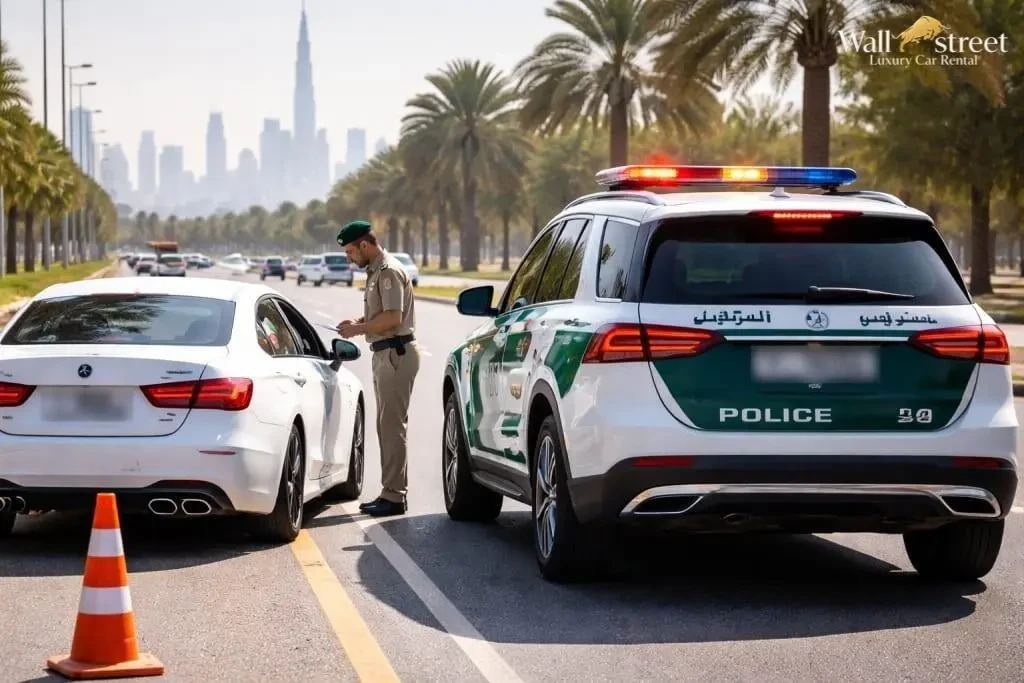
Stops are generally tied to a clear reason rather than chance. The most common are:
• A visible traffic offence, such as speeding, using a phone at the wheel or driving without a seatbelt
• Unsafe driving, including abrupt lane changes, tailgating or aggressive overtaking
• A routine checkpoint, which can appear around public holidays and large events
• A document or vehicle check, where an officer simply confirms the driver and the car are in order
Nationality plays no part. A rental car is treated exactly like any other vehicle on the road.
What to Keep in the Car
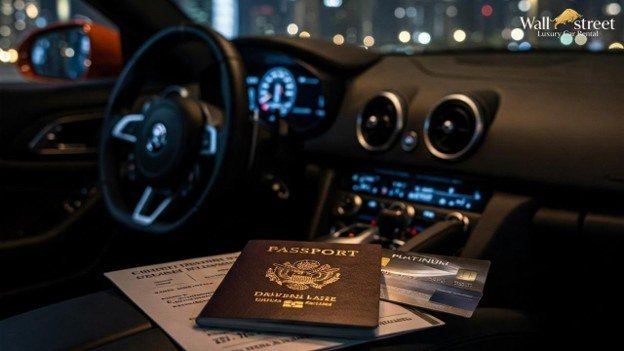
Having the right papers within easy reach is the single most effective way to keep a stop short. Before you set off each day, make sure you can quickly show:
• Your valid driving licence, and an international driving permit where your licence requires one
• Your passport or a clear copy, and your visa or entry details
• The rental agreement for the vehicle
If you are unsure whether your home licence is accepted for driving in the UAE, ask our team when you book. Requirements depend on the country that issued your licence, and it is far easier to settle this before you arrive than at the roadside.
If You Are Signalled to Stop: A Simple Routine
1. Stay calm and signal. Reduce speed gradually and indicate that you have understood.
2. Pull over safely. Move to the right-hand side of the road, or the nearest safe place, and switch on your hazard lights.
3. Stay in your seat. Keep your hands visible and wait for the officer to approach, unless you are asked to step out.
4. Switch off the engine and lower the window. Courtesy is noticed and appreciated.
5. Hand over your documents when asked, not before.
6. Ask politely if something is unclear. Most officers speak English and will explain the reason for the stop.
Raising your voice or arguing never helps. A respectful tone almost always leads to a quick and courteous conclusion.
Understanding Fines and Tolls in a Rental Car
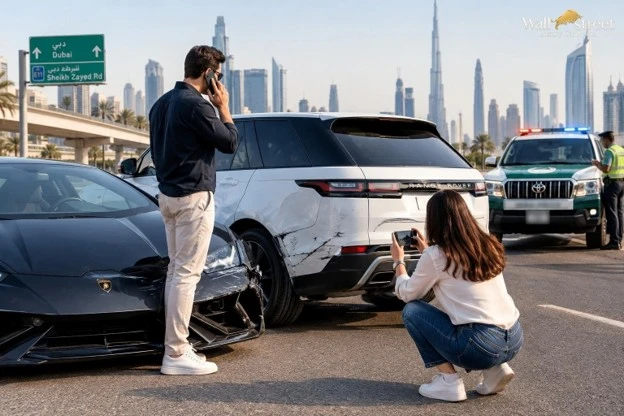
Dubai relies heavily on technology to manage its roads. Speed radars, automated cameras and electronic toll gates record violations without an officer ever being present. That has two practical consequences for a rental guest.
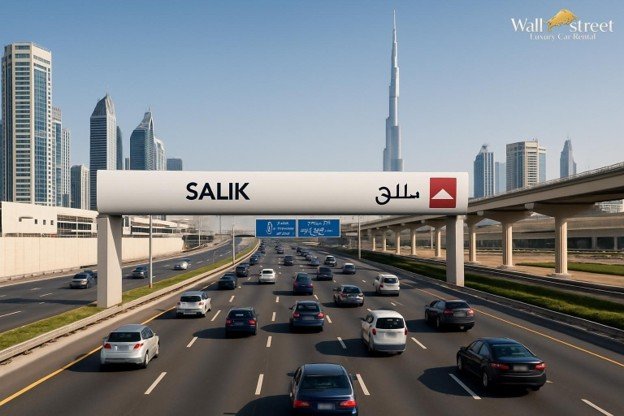
First, a fine is attached to the vehicle rather than to the moment you were stopped. A camera can register an offence that you only hear about after your trip, through the rental company. Second, Salik toll gates charge automatically as you pass beneath them, so there is no need to stop or pay in cash.
Because the details of how fines and tolls are settled depend on your rental terms, we recommend asking our team to explain the process when you collect your car. Clear expectations at the start mean no surprises at the end.
The Offences Visitors Most Often Overlook
You do not need to memorise the traffic code, but these are the points that catch out the most travellers:
• Speed limits change quickly. A road can drop from a high limit to a lower one within a short distance, and cameras are common.
• Phones are for hands-free use only. Even a quick glance at a message can lead to a penalty.
• Seatbelts apply to front seats. Seat belts are compulsory for the front seat passengers.
• Parking rules are strictly enforced. Pay attention to signs and paid zones, especially near malls and beaches.
• Alcohol and driving do not mix. The UAE takes a zero-tolerance approach, so plan your evening transport accordingly.
• Keep to the lane you need. Sudden crossings of lines and last-second exits are among the most frequent causes of stops.
What If a Vehicle Is Held by the Authorities?
Serious violations, such as reckless driving, can result in a vehicle being impounded. This is rare for visitors who drive sensibly, but it is worth knowing what to do: stay calm, cooperate fully and contact Wall Street Luxury Car Rental straight away. Our team will explain the next steps and guide you through the process.
Driving a Sports or Exotic Car: Extra Considerations
Performance cars attract attention, and that attention sometimes includes the police. A few habits help:
• Take time to learn the car. Understand the driving modes, the throttle response and the car’s width before you join a highway.
• Keep the exhaust and engine in check. Loud revving in city streets draws unwanted notice.
• Choose your route in advance. Setting navigation before you leave avoids sudden lane changes.
• Save the spirited driving for the right place. Public roads are not tracks.
Whatever you choose, from an exotic car rental in Dubai to a refined Rolls-Royce, the same principle applies: smooth, measured driving is the surest way to enjoy the experience.
Frequently Asked Questions
Are tourists stopped more often than residents? No. Stops are based on driving behaviour and checkpoints, not on where you come from.
Can I pay a fine directly to an officer? Fines are typically recorded electronically. If you are unsure, ask the officer to explain, and speak to our team about how fines connected to your rental are handled.
What if I cannot find my rental documents? Contact us immediately and we will help you obtain what you need.
Do I need to understand Arabic? No. English is widely spoken, and officers will usually explain matters in English. If anything is unclear, ask politely or call us.
0 Comments
Drop your comment
Popular Blog